


Until the 1850s, cameras didn’t exist. If you want to see what Rembrandt looked like, you either saw him in person or you looked a painting of his self-portrait. Painters like Rembrandt were uniquely able to render reality onto a canvas. There was a high technical barrier to doing so with precision. Accordingly, to accomplish such a feat, Rembrandt underwent many years of apprenticeships.
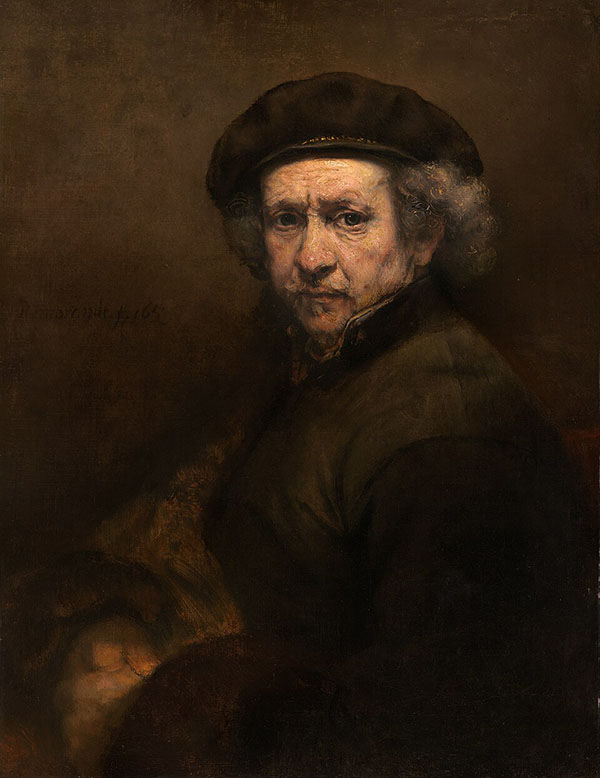
Self-portrait by Rembrandt, 1659
But when the camera was invented, a machine was suddenly able to render reality in minutes what previously took a skilled master weeks if not months to do. Anyone could click a button and render reality onto paper with precision without enduring years of dedicated training. The technical barrier was suddenly gone. I’m sure there were people who said the camera would destroy painting, that cameras make painters obsolete because it could render reality just as well. But the camera didn’t destroy painting, though it arguably forced a redefinition of art itself.
Until recently, LLMs and AI more broadly didn’t exist. Some are saying that AI will destroy coding, that AI renders programmers obsolete. I think we can look to history and the art world for a sense of what to anticipate. Here are five things that painting in the age of cameras can teach us about coding in the age of AI.
1. When technical barriers are removed, value shifts downstream, from execution for replication to conception of originality.
Before cameras, a painter’s ability to render reality, to replicate what you saw on a canvas, was a technically challenging and therefore prized skill. After cameras, rendering reality became much more trivial. So, depicting realism no longer held the same value. Instead, value shifted downstream to the interpretation and feelings a piece of art evoked. As such, painters pivoted to focus on the abstract, depicting the deconstructed reality rather than the technically accurate one, as reflected in the modern and contemporary art movements. Value also shifted towards originality, being able to conceive something that has never been done before, as exemplified by Robert Rauschenberg’s White Paintings.
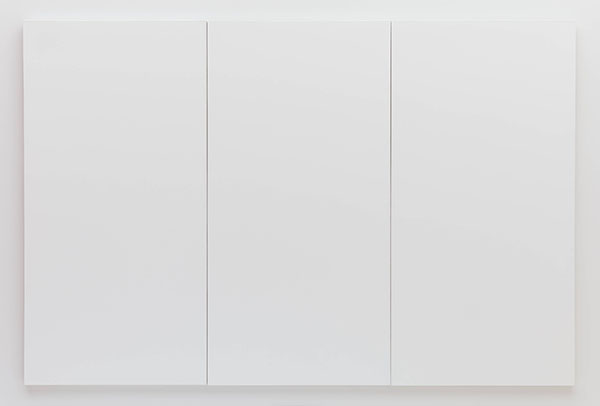
White Painting [three panel] by Robert Rauschenber, 1951
Before AI, a programmer’s ability to memorize syntax and write code to accomplish pre-defined tasks (like inverting a binary tree) was a technically challenging and therefore prized skill. After AI, writing syntactically correct boilerplate functions is now trivial. So, handcrafting functional code no longer holds the same value. I think value will shift downstream to applications, in our ability to define what should be built and how to build it, not just the mechanics of typing it out. Likewise, I believe value will also shift towards originality, particularly in implementation and, again, unique applications, and being able to create new data structures, algorithms, modules and combinations thereof not currently represented in the training data.
2. New technologies open new frontiers.
The camera didn’t render painters obsolete. But it did enable new types of artists like photographers, photojournalists, and even mixed-media artists who combine both photography and painting.
Likewise, AI is creating new types of programmers like prompt engineers and vibe-coders. I would consider myself a mixed-style coder who combines aspects of trad- and vibe-coding.
3. Old skills don’t become obsolete; they become foundational.
The best photographers still understand anatomy, lighting, form, color theory, composition, and so forth.
Likewise, the best programmers will still need to understand object-oriented design, functions, data structures, and generally how to break down big tasks into smaller, perhaps loopable, parallelizable modules, and so forth in order to build applications that are useful and impactful.
4. Removing technical barriers improves accessibility. Improved accessibility means broader participation.
When becoming an artist required long apprenticeships and decades of study, only an extremely privileged class of people could afford such an endeavor. That gatekeeping filtered who was able to participate and subsequently what they were interested in and ultimately what aspects of reality they chose to document through their paintings. When photography democratized this documentation of reality, we are able to see previously underrepresented forms of reality depicted. Consider Zanele Muholi, a photographer and self-proclaimed visual activist who chooses to depict the “Black queer and trans visual history of South Africa for the world to know of our resistance and existence,” a depiction of reality that such historically trained painters in elite circles did not produce.
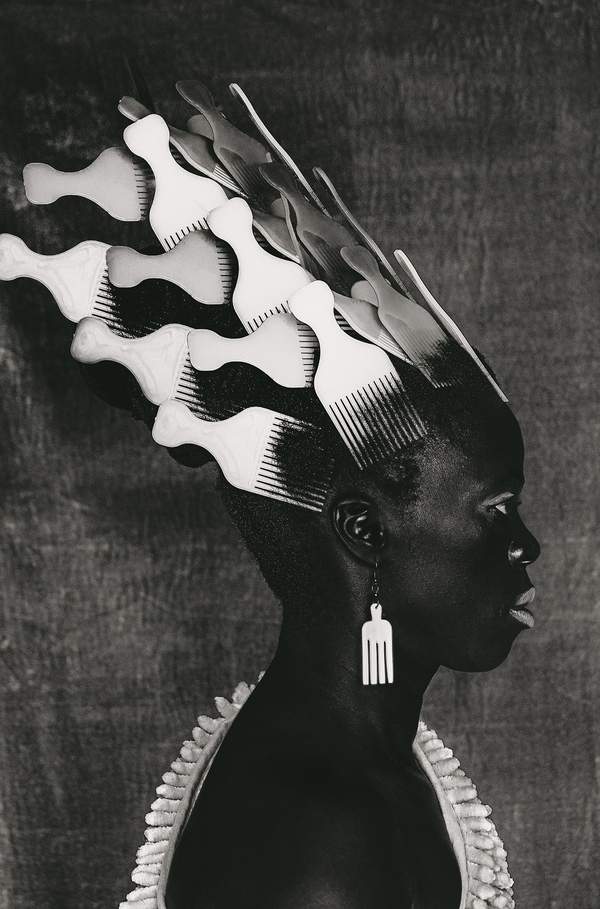
Qiniso, The Sails, Durban by Zanele Muholi, 2019
When becoming a programmer requires years of dedicated study and frankly a tolerance of rude StackOverflow replies, only certain types of people could engage. That gatekeeping filtered who was able to participate and subsequently what they’re interested in and ultimately what coding projects and applications they choose to tackle. I am so excited to see what happens when more people are able to harness the power of programming to tackle coding projects and applications they deem important and worthwhile.
5. Change takes time.
Photography didn’t instantly redefine art; it launched decades of experiments. Years after the camera’s invention, Impressionism with its choppy visible brushstrokes rocked the art world. Cubism and abstraction then took another generation with conceptual art and postmodern practices arrived after that. Each experiment had early adopters but also resistance, champions as well as critics. The broader shift in what was deemed valuable in art unfolded over decades, not days.
Likewise, AI will not instantly redefine software. But it will set off sequence of experiments. It’s too early to know what all these experiments will be, though I think we’re already seeing the consequences of some of these experiments in action. In this moment, we have the opportunity to take part in history by engaging as early adopters or resisting, serving as champions or as critics, to influence how these experiments unfold and also which experiments will surely follow. Ultimately, the real change that AI will bring to coding will not happen tomorrow, despite what all the hype may suggest.
On a personal note, before becoming a computer scientist and professor, I used to work as a professional photographer. Until generative AI art came on the scene, I would regularly license out my work for book covers and other derivative uses. I have since lost all such clients and am effectively retired from professional photography.
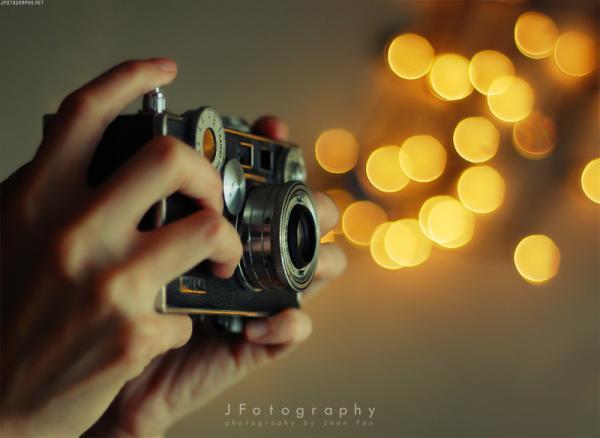
Lights, Camera, Action by Jean Fan, 2017